



News
For furniture, appliances, machinery, automotive parts, metal products, and other heavy items, protective packaging is not simply about using more material. The bigger challenge is making the material work efficiently under load while also handling impacts, compression, and movement during transit.
3D Honeycomb Paper Mat offers a different approach: instead of simply adding more material, change the structure of the material itself. Through specialized forming, flat paper is transformed into a three-dimensional honeycomb structure with depth. This allows paper to do more than wrap a product—it can also provide cushioning, support, load distribution, and protection.
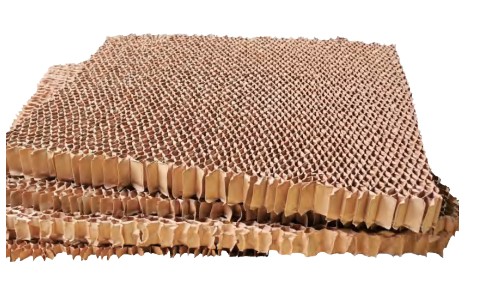
The Key to Stronger Paper Is Not Just Thickness. It’s Structure.
Conventional paper is essentially a flat material. Its limited thickness means it can provide only a limited amount of cushioning space.
3D Honeycomb Paper Mat changes the geometry rather than simply making the paper thicker. Through specialized forming, the flat sheet becomes a three-dimensional cushioning structure made up of interconnected honeycomb cells. When the product is exposed to pressure or impact, the force does not have to remain concentrated on a single section of paper. Instead, it can transfer through multiple connected cells and spread across a larger area, allowing more of the structure to participate in load bearing.
For products weighing tens or even hundreds of kilograms, concentrated pressure at only a few contact points can create excessive local stress. This can lead to deformation or reduced protection.
The three-dimensional honeycomb structure provides multiple interconnected cells that can work together to support the product. Instead of relying on a small number of contact points, the load can be transferred and distributed through a larger structural area.
This changes the basic approach from single-point loading to distributed loading, and from flat support to three-dimensional support.
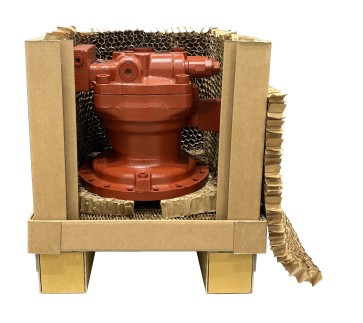
For heavy or irregularly shaped products such as furniture, appliances, machinery, automotive components, and metal parts, this structural approach provides another way to use paper-based materials in heavy-duty protective packaging.
Flexibility + Structure for Irregular Products
Heavy products are often far from perfectly symmetrical. Mechanical components and motors may have protrusions, corners, connection points, or different heights across the same product.
With rigid cushioning materials, protection often requires precise dimensional design around the product. In some applications, this can also mean developing different molds for different product shapes.
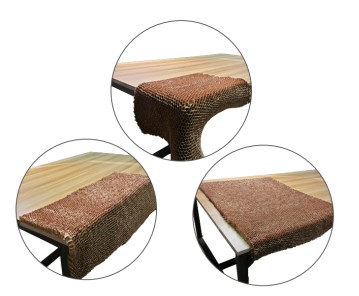
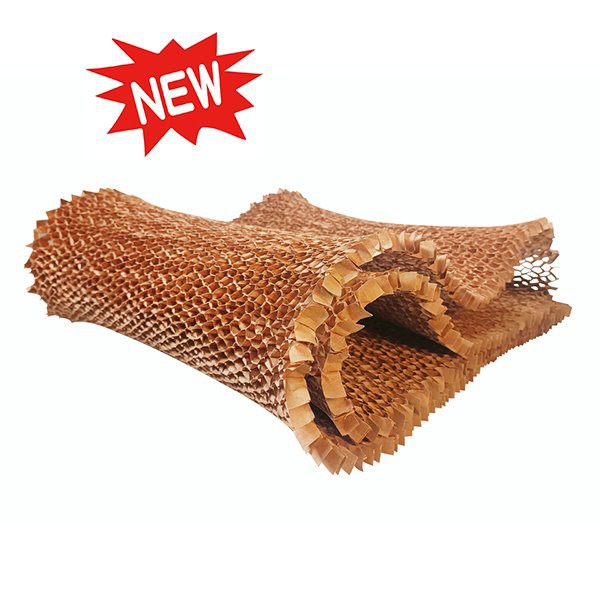
3D Honeycomb Paper Mat combines a degree of flexibility with a three-dimensional structure. It can be bent, adjusted, and wrapped around different product shapes, giving packaging designers more flexibility when working with irregular products.
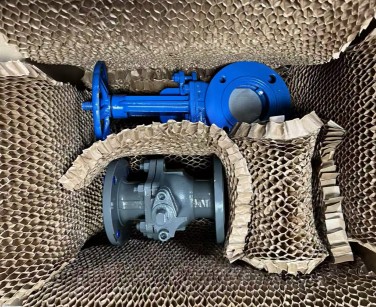
It can be used not only as bottom support, but also around the product to provide cushioning for corners, sides, and contact areas.
For companies handling multiple product sizes and configurations, this combination of structure and flexibility can create more options for packaging design without relying entirely on rigid, product-specific cushioning components.
Paper Is the Material. Structure Is the Value.
The core value of 3D Honeycomb Paper Mat is not simply that it is made from paper. It is the way a three-dimensional honeycomb structure gives a flat sheet of paper packaging functions that would be difficult to achieve with a conventional flat sheet.
Paper is the material. Honeycomb is the structure. Space creates cushioning. Structural deformation helps absorb energy. Load distribution supports protection. Flexibility enables adaptation.
Together, these principles turn paper from a simple wrapping, filling, or separation material into a three-dimensional packaging structure that can provide support, cushioning, load distribution, and wraparound protection.
For heavy, fragile, or irregularly shaped products, this represents a different way to think about protective packaging:
Instead of asking how much more material is needed, ask how effectively the structure can make the material work.


Popular Products
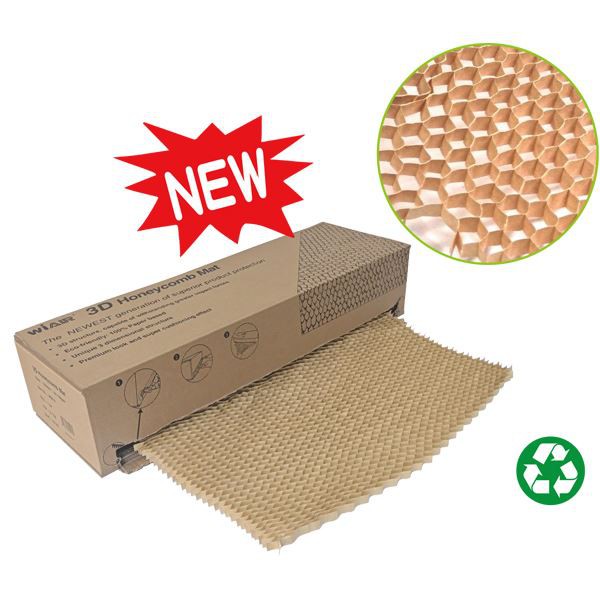
 3D Honeycomb Paper Mat Box Dispenser3D Honeycomb Paper Mat Box DispenserThe perfect fragile wrap material! This dispenser Box is so easy to operate! Just pull the Honeycomb Material from the Box and tear it off manually. Every box contains up to 30 meters stretched 3D Honeycomb Paper Mat Material....READ MORE
 3D Honeycomb Paper Mat3D Honeycomb Paper MatThe 3D Honeycomb Paper Mat Systems are converting the Honeycomb Paper Core Material into the 3 dimensional structured 3D Honeycomb Paper Mat packaging material which offers both, superior cushioning effect and highest flexibility...READ MORE
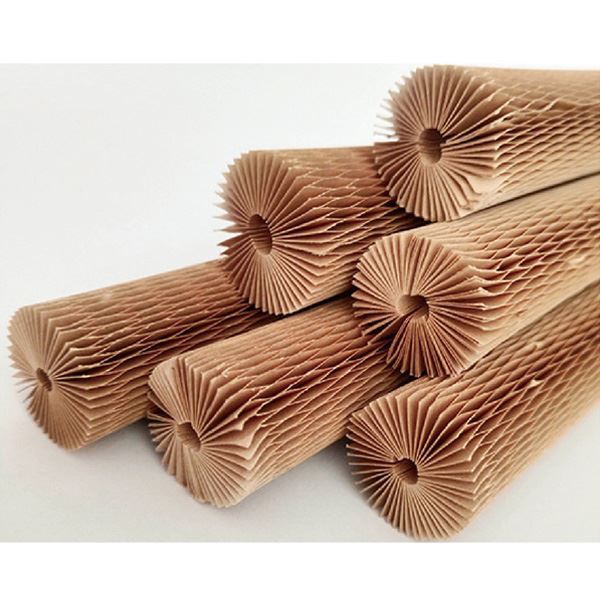
 Honeycomb Paper SleeveHoneycomb Paper Sleeve3D Honeycomb Paper Sleeve-The Plastic-Killing Revolution! 100% biodegradable, hexagonal structure replaces bubble wrap & foam! Unmatched shockproof protection for electronics, fragile goods and industrial parts...READ MORE
 Triple Fold Kraft PaperTriple Fold Kraft PaperWhy choose paper cushion packaging? At present, the buffer packaging on the market basically uses plastic consumables, a large part of which are non-degradable and non-recyclable, causing great pollution to the environment. Countries around the world have successively introduced policies to...READ MORE
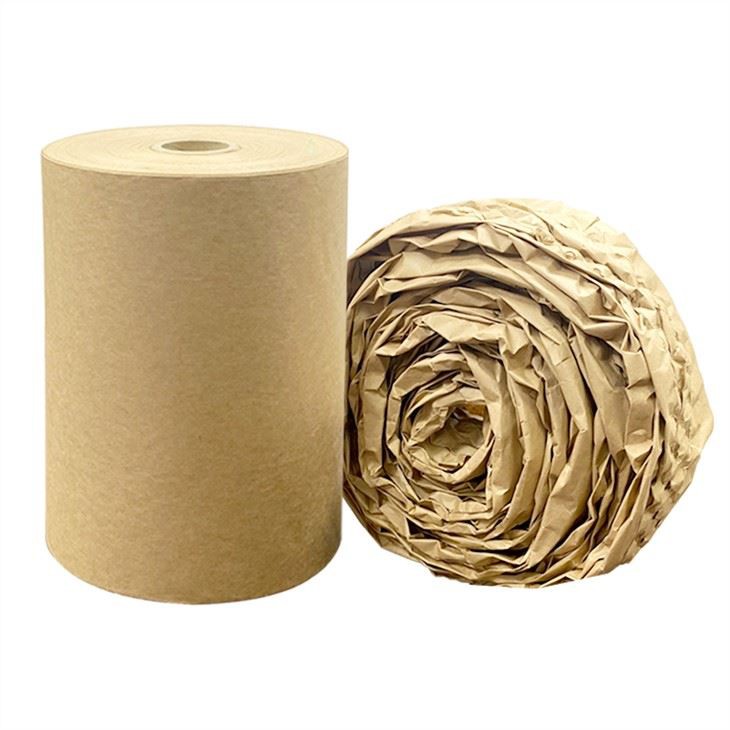
 Roll Cushion PaperRoll Cushion PaperKraft paper rolls are made of natural coniferous resin fibers, which can be degraded and decomposed, so they will not harm the environment. The kraft paper roll is extruded by the paper pad machine to become a kind of cushion paper cushion, which can be used to wrap items or fill space with good cushioning effect..READ MORE
 Z-Fold Cushion PaperZ-Fold Cushion PaperRip & Go - Eco Protection Revolution! Tear free no tools required! Special pre-cut tear lines let you snap perfect lengths - zero waste! Made from reinforced paper pulp, protects up to 10kg items (100% recyclable!)...READ MORE
Send Inquiry